
By DIATTA Nestor Ambroise · Published on 22 October 2026
What is cognitive stimulation?
Cognitive stimulation brings together activities that engage intellectual functions: memory, language, attention, orientation, or the ability to organise a task. It builds upon what the person can still do, rather than what has been lost.
At home, these activities take place in a known environment, with familiar objects, which can reassure the individual and encourage their engagement.
What does a home session look like?
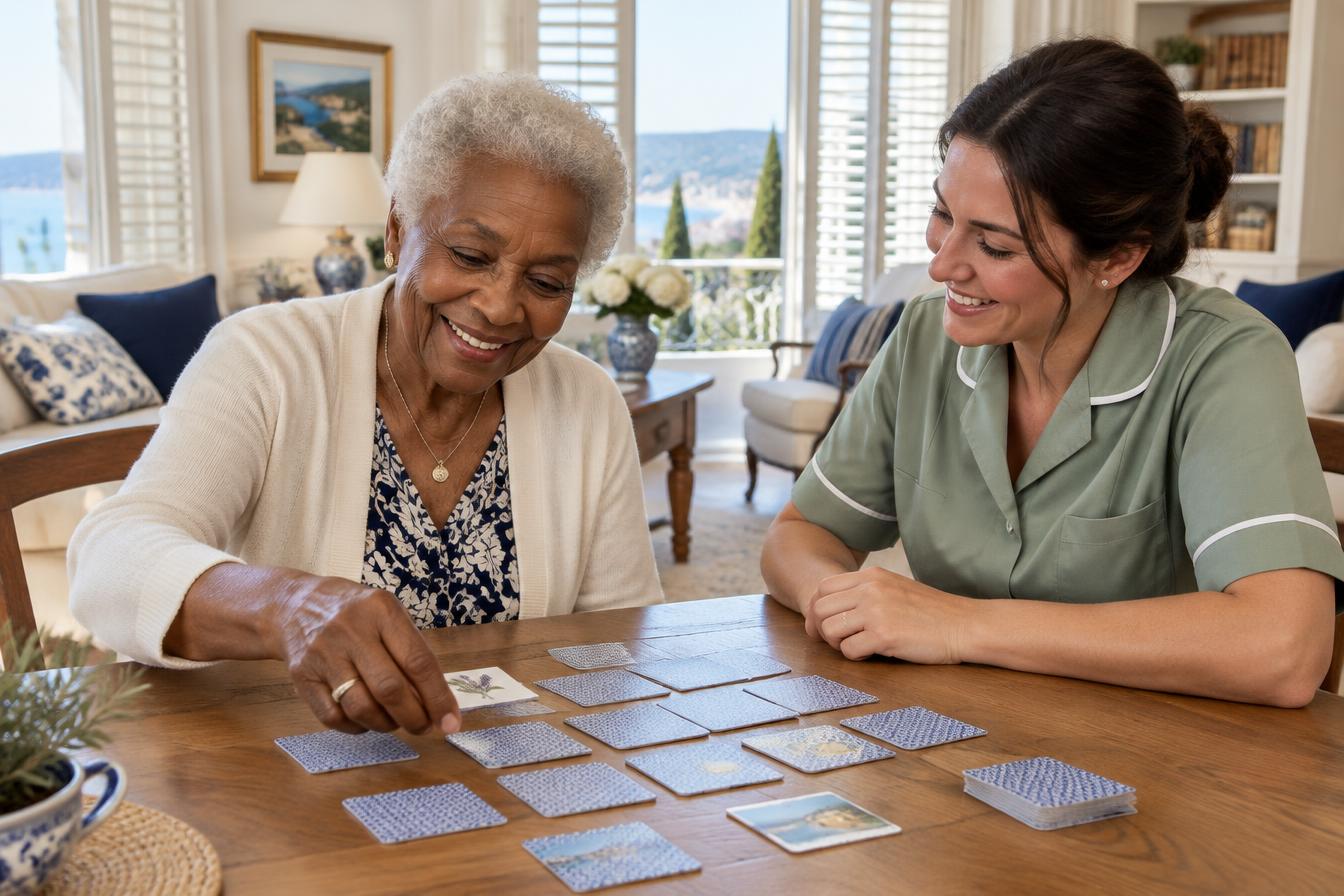
A session is shaped around the person's tastes and personal history. It may combine several types of activities:
- adapted memory or board games;
- discussions around photos or personal objects (reminiscence);
- language activities : reading, songs, guided conversation;
- everyday tasks broken down into simple steps.
Their pace is respected: the goal is not performance, but participation and enjoyment.
What are the limitations of cognitive stimulation?
Cognitive stimulation is not a medical treatment for Alzheimer's disease and cannot restore lost abilities. It aims to stimulate preserved abilities, encourage independence and support quality of life.
It complements the care provided by healthcare professionals, without replacing it. Any medical questions must be directed to the person's doctor.
How does GéroStim-Expertise organise cognitive stimulation?
At GéroStim-Expertise, cognitive stimulation is part of the home PASA workshop: 2-hour sessions, recommended once or twice a week, designed following an initial evaluation. A liaison logbook enables sessions to be tracked and activities to be adjusted.
To explore further, discover the home PASA workshop or contact GéroStim-Expertise.
Frequently asked questions
- Can cognitive stimulation slow down the disease?
- I cannot promise any effect on the progression of the disease. The cognitive stimulation I offer aims to engage preserved abilities and support quality of life; questions concerning the progression of the condition should be addressed to the doctor.
- Does the person need to agree to take part?
- Yes. Activities are offered, never imposed. I adapt to the person's mood and fatigue on the day, and I prioritise activities that hold personal meaning for them.
This article is for informational purposes and does not replace medical advice. In case of emergency, call 15 or 112.